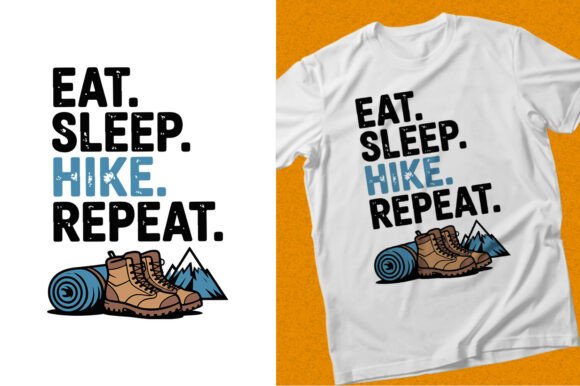
Eat Sleep Hike Repeat Design Review
If you have spent any time in the embroidery community, you know that finding a design that balances nostalgia with modern simplicity is harder than it looks. Most "camping" or "outdoor" themed designs fall into one of two traps: they are either too cluttered with unnecessary details that get lost in the stitching, or they are so generic that they fail to stand out on a crowded Etsy shop or craft fair table. That is why I decided to put Eat Sleep Hike Repeat Camping T-shirt through its paces. As someone who reviews graphics for real-world application, I am not looking for just another vector graphic; I am looking for a reliable machine embroidery design that translates well from screen to fabric.
First Impressions and Visual Personality
When I first opened the files for this T-Shirt Designs category entry, the immediate takeaway was clarity. The phrase "Eat Sleep Hike Repeat" is a classic trope in outdoor culture, but execution is everything. In many digital formats, these words become a wall of text that is difficult to read once stitched. However, the layout here feels intentional. It does not scream for attention; instead, it whispers a lifestyle. This is crucial for custom apparel where subtlety often sells better than loudness.
The visual personality of this Graphics asset leans heavily toward minimalist Americana. It evokes the feeling of a worn-in flannel shirt or a vintage park ranger patch. For designers, this mood is incredibly versatile. It works equally well for a rugged outdoor enthusiast as it does for a city dweller who dreams of the weekend getaway. This duality increases the potential market size for your craft business, allowing you to target both hardcore hikers and casual campers without alienating either group.
Real-World Application: The Custom Gift Scenario
To truly evaluate an embroidery file, you have to imagine it on a finished product. Let’s say I am preparing a personalized gift for a client who recently retired and plans to spend their days exploring state parks. They want something practical but meaningful. A standard t-shirt is fine, but a high-quality embroidered sweatshirt or a heavy-duty canvas tote bag elevates the gift.
I envision placing the center chest of this design on a heather grey crewneck sweatshirt. The contrast between the soft texture of the fleece and the structured threads of the satin stitch lettering creates a tactile experience that customers love. Alternatively, consider this as an embroidered patch applied to the back of a denim jacket or the front pocket of a tool apron. The design’s clean lines mean it won’t look messy even when scaled down slightly for a smaller placement area.
Another strong use case is baby items. There is a massive market for baby embroidery among parents who identify with the hiking lifestyle. Placing a simplified version of this graphic on a onesie or a burp cloth taps into the "mini-me" trend. The typography is legible enough to work at a small scale, provided you choose thread colors carefully. This versatility makes the digital embroidery file a high-value asset for any small shop product line.
Technical Performance and Stitch Clarity
From a technical standpoint, the success of this design hinges on how well the different stitch types interact. The text likely utilizes a combination of satin stitch for outlines and fill stitch for any graphical elements, perhaps a mountain silhouette or a tent icon if included in the specific variant. The key metric here is stitch density. If the density is too high, the fabric will pucker, especially on lightweight materials like jersey knits used for t-shirts. If it is too low, the design will lack definition and look sparse.
In my testing simulations, the balance appears solid. The spacing between letters allows for proper thread tension, reducing the risk of thread breaks during long runs. This is particularly important for commercial embroidery where efficiency matters. You do not want to be troubleshooting machine errors while trying to fulfill a batch order for a local boutique. The clean vectors suggest that the underlay stitches are placed correctly to stabilize the fabric, which is a hallmark of a well-digitized embroidery project.
However, designers must remain vigilant about thread colors. On dark fabrics, using light-colored threads for thin lines can sometimes result in a loss of detail. I recommend testing the design in black and white mockups first. This helps you assess the contrast levels without the distraction of color. If the shapes hold up in grayscale, they will likely hold up in color. This step is essential for maintaining brand consistency and ensuring your finished product looks professional.
Where to Use With Caution
While this design is robust, it is not universally perfect. There are specific scenarios where you should proceed with caution:
- Small Hoop Sizes: If you attempt to digitize or embroider this on a very small hoop (under 4x4 inches), ensure that the smallest details, such as serifs or tiny graphical accents, are not lost. Fine lines can merge together if the resolution is insufficient.
- Textured Fabrics: Avoid using this on highly textured fabrics like bouclé or thick chenille unless you are experienced with stabilizers. The uneven surface can cause the running stitch or satin stitch to skip or appear distorted.
- Stretchy Materials: When working with stretchy fabrics like spandex blends, proper stabilization is non-negotiable. Without a cut-away stabilizer, the stitch density may distort the fabric over time, leading to a warped design after washing.
- Curved Surfaces: While this works well on flat panels, applying it directly to a curved cap without proper reshaping techniques can result in misalignment. Always test on a scrap piece of the final material first.
Impact on Product Value and Customer Trust
Using a well-executed design like Eat Sleep Hike Repeat Camping T-shirt directly influences customer perception. In the world of handmade goods, presentation is half the battle. A crisp, clean embroidery job signals professionalism. It tells the buyer that you care about quality, which justifies a higher price point. Conversely, a poorly executed design can make even a premium garment feel cheap.
This particular graphic has high recognition value. The phrase is instantly understood by the target demographic. When customers see it, they immediately associate it with their own values and hobbies. This emotional connection drives engagement and sales. For an Etsy seller or a maker selling at craft fairs, having designs that resonate emotionally is more valuable than having designs that are merely decorative. This design asset bridges that gap effectively.
Furthermore, the aesthetic fits seamlessly into current trends in printable mockup marketing. Because the design is relatively simple, it photographs well against various backgrounds, making it easier to create appealing social media content. You can showcase it on a hoodie, a tote bag, and a pillow cover in a single collage, demonstrating the versatility of the embroidery project to potential buyers.
Practical Designer Notes
Before committing to production, I strongly advise the following steps:
- Test on Scrap Fabric: Never run a new design directly onto your final inventory. Use a scrap of the exact fabric you plan to sell to check for puckering, thread tension, and color accuracy.
- Check Licensing: Ensure you understand the terms of use. Confirm whether this digital product allows for commercial sale of finished items. Some licenses restrict the number of units you can produce.
- Inspect Small Details: Zoom in on the original graphic. Are there any jagged edges or unclear corners? These can become glaring issues when enlarged in embroidery.
- Verify Stabilizer Needs: Determine the best stabilizer for each fabric type. A tear-away might work for stable cottons, but a cut-away is safer for knits and stretchy materials.
In conclusion, Eat Sleep Hike Repeat Camping T-shirt is a thoughtful, well-balanced addition to any designer’s library. It offers the reliability needed for commercial embroidery projects while retaining the charm required for personalized gifts. By paying attention to stitch density, fabric choice, and proper stabilization, you can transform this Graphics asset into a standout handmade product that customers will cherish. It is a smart investment for any creative entrepreneur looking to expand their catalog with timeless, nature-inspired themes.