Goat Trip T-Shirt Design Review
As a designer who spends half my day staring at stitch maps and the other half debating thread colors, I don’t just buy embroidery files; I stress-test them. The market is flooded with generic clipart that looks terrible when converted to satin stitches, so finding a design with actual personality is rare. Recently, I pulled up A Group of Goats Is Called a Trip T-Shirt Design – Funny Goat Pun Sketch Graphic to see if it had the legs for real-world application. My goal was simple: determine if this graphic holds up under the needle, translates well across different fabrics, and actually sells as a finished product.
The First Impression: Mood and Visual Personality
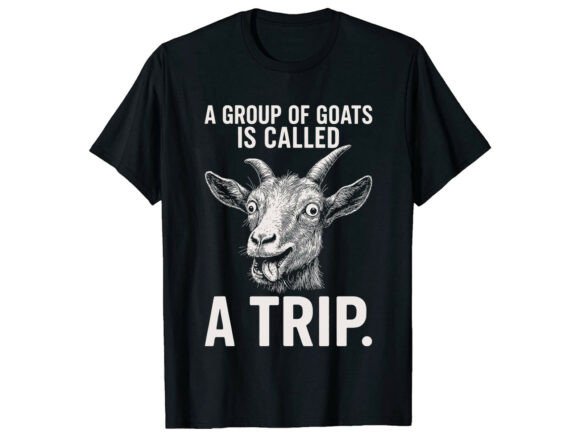
When you first look at the source file, the hand-drawn sketch aesthetic jumps out immediately. In the world of machine embroidery, clean vector lines often translate better than complex shading, but there is a specific charm to a rougher, organic line work that mimics the texture of felt or wool. This design leans into that "sketchy" vibe, which gives it an approachable, rustic feel. It doesn’t scream corporate logo; it whispers "craft fair favorite."
The layout is balanced, with the text "A Group of Goats Is Called a Trip" paired with a quirky goat illustration. For an embroiderer, the balance between the typography and the graphic is crucial. If the text is too dense, it becomes a muddy mess of fill stitches. Here, the playful nature of the pun suggests a lighter touch in execution. The visual personality is humorous and slightly whimsical, which makes it perfect for casual wear and home goods rather than formal attire. It feels like something you’d wear on a Sunday morning coffee run or keep on a kitchen towel while baking.
Real-World Application: Where Does It Shine?
I put this design through its paces by imagining various project scenarios. The most immediate fit is obviously custom apparel, specifically t-shirts and sweatshirts. However, as a seasoned reviewer, I look beyond the obvious. This design has significant potential for lifestyle products.
Consider a tote bag design made from heavy canvas or denim. The sketch style contrasts beautifully with the coarse weave of canvas, creating a textured, artisanal look. Similarly, for sweatshirt embroidery, particularly on fleece or French terry, the soft edges of the sketch graphic prevent the stiff, plastic-like appearance that can sometimes plague dense fills. It sits comfortably on the fabric without overwhelming it.
Another strong candidate is apron embroidery. A chef or baker receiving a personalized apron with a goat pun would likely find it both functional and fun. The humor breaks the ice, making it an excellent personalized gift for someone who loves animals or farming aesthetics. Furthermore, for Etsy sellers and small shop owners, this design offers versatility. It can be adapted into a embroidered patch for backpacks or jackets, or even scaled down for baby embroidery on onesies or muslin cloths, provided the details are simplified.
Technical Considerations and Stitch Behavior
Translating a sketch graphic into a machine embroidery design requires careful attention to stitch types. The outline of the goat and the letters will likely rely on satin stitch for crispness, while internal details might use running stitch to mimic pencil strokes. This is where the stitch density becomes critical. If the designer hasn’t optimized the file, those thin running stitches can break easily on high-speed machines or fray after washing.
I always advise testing such designs on scrap fabric first. The sketch style relies on negative space; if the fill stitch areas are too close together, the distinct "hand-drawn" quality disappears, replaced by a solid block of color. When reviewing the file structure, I check whether the thread colors chosen provide enough contrast against the intended background. On dark fabrics, a light-colored sketch might get lost unless the underlay is robust. Conversely, on white cotton, a black or navy sketch will pop, maintaining the integrity of the line work.
For digital product sellers, it is vital to confirm the hoop size limitations. If the design exceeds standard 4x4 or 5x7 hoops, it may require re-digitizing for larger commercial machines, which adds overhead for the end user. Always verify the technical specs before listing this as a digital embroidery file.
Where to Use With Caution
While this design is versatile, it is not a one-size-fits-all solution. There are specific contexts where A Group of Goats Is Called a Trip T-Shirt Design might struggle:
- Small Hoop Sizes: If the design includes intricate details in the goat’s facial features, shrinking it to fit a tiny 2x2 hoop may result in loss of definition. The humor lies in the expression; if that gets lost, the product loses value.
- Textured Fabrics: While it works well on canvas, highly textured fabrics like bouclé or thick chenille can obscure the fine lines of the sketch. The needle may bounce, causing inconsistent stitching.
- Stretchy Fabrics: Knits can distort during hooping. Without proper stabilizer support, the circular motion of the goat or the straight lines of the text may warp, ruining the professional finish.
- Curved Surfaces: Attempting this on a cap or hat requires precise digitizing for curvature. A flat design applied to a curved surface without compensation can look stretched and amateurish.
Impact on Product Value and Customer Trust
In the handmade market, presentation is everything. A well-executed embroidery project signals quality and care. Using a design like this, which has clear visual intent and good composition, helps build brand consistency for craft businesses. Customers trust brands that offer cohesive, thoughtfully designed items. When a buyer sees a finished product where the lines are clean and the pun is legible, they perceive higher value.
Furthermore, the novelty factor drives engagement. People love sharing unique, funny items on social media. A printable mockup of this design on a tote bag or hoodie is likely to perform well in marketing campaigns because it evokes an emotional response—laughter. This emotional connection translates to higher conversion rates for commercial embroidery projects.
Practical Designer Notes for Success
- Test on Scrap Fabric: Never go straight to the final garment. Test the design on the exact fabric type you plan to sell to check for puckering or thread breaks.
- Check Stabilizer Usage: For sketch styles, a cut-away stabilizer is often best to maintain stability over time, especially for items that will be washed frequently.
- Review Black and White Mockups: Convert the design to monochrome to ensure the shapes hold up without the distraction of color. This checks the fundamental strength of the artwork.
- Confirm Licensing: Before selling any finished product or design assets, ensure you have the correct commercial license. Many sketch graphics have restrictions on how many units you can produce.
- Inspect Small Details: Zoom in on the digitized file. Are the corners sharp? Are the gaps between stitches consistent? Poor digitizing is the number one reason for customer returns.
In conclusion, A Group of Goats Is Called a Trip T-Shirt Design is a charming, practical choice for designers looking to add a touch of humor to their collections. It bridges the gap between cute and clever, offering broad appeal across multiple product categories. By paying attention to stitch density, fabric choice, and proper stabilization, you can transform this graphic into a standout handmade product that customers will love to wear and display.