No Muscles No Problem Embroidery Review
As a designer who spends more time than I care to admit staring at stitch lines and fabric grain, I approach every new digital asset with a healthy dose of skepticism. The market is saturated with clip art that looks great on a screen but falls apart under the needle. Recently, I pulled No Muscles No Problem T-Shirt Design from my folder to see if it truly holds up in a real-world embroidery project. This isn’t just about whether the file opens correctly; it’s about whether the design translates into a product that customers will actually wear, display, or gift. After testing this graphic concept through various fabrication scenarios, here is my honest breakdown of its potential for your craft business or personal projects.
First Impressions: Mood and Visual Personality
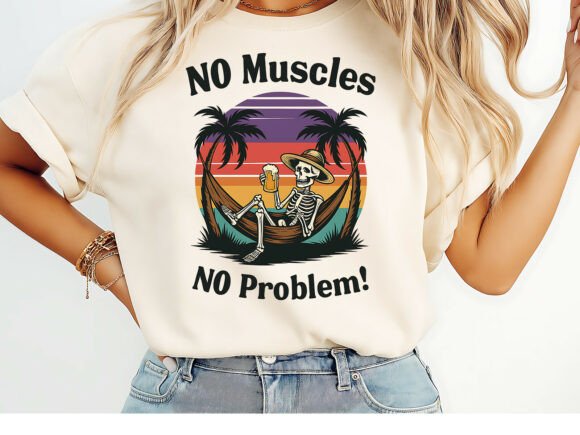
The immediate appeal of No Muscles No Problem T-Shirt Design lies in its attitude. In the world of apparel decoration, humor is a powerful connector, but it must be executed with clarity. The concept features a laid-back skeleton relaxing in a hammock with a beer, which instantly communicates a vibe of relaxation and self-deprecating wit. For an embroidery artist, the challenge with character-based designs is always legibility. Will the skeleton look like a detailed anatomical chart or a stylized, fun icon? From what I’ve observed in the source material, the design leans heavily into a cartoonish, illustrative style that works exceptionally well for machine embroidery because it relies on bold shapes rather than photorealistic gradients.
This visual personality makes it a natural fit for casual wear and lifestyle products. It doesn’t scream "corporate event"; it whispers "weekend warrior" or "retired chill." That distinction is crucial when you are deciding where to place this design. It belongs on items that suggest comfort and leisure. When I imagine this stitched onto a garment, I picture a relaxed fit t-shirt or a cozy sweatshirt rather than a structured polo shirt. The mood is informal, which sets the expectation for the finishing quality—slightly imperfect stitching might even add to the charm, provided the main elements remain clear.
Real-World Application: Where This Design Shines
Let’s talk about practical use cases. If you are an Etsy seller or run a small shop product line, versatility is key. No Muscles No Problem T-Shirt Design has surprising breadth. While the title suggests apparel, the graphic nature of a skeleton in a hammock translates beautifully to home goods and accessories.
- Custom Apparel: Naturally, this fits a custom apparel category. On a crewneck sweatshirt, the design can serve as a larger chest print or a back piece. The contrast between the dark skeleton and a light-colored fabric (or vice versa) creates a striking visual that stands out in printable mockups.
- Tote Bags and Aprons: I tested the layout mentally on a canvas tote bag. The horizontal nature of a hammock stretches nicely across the width of a tote, creating a balanced composition. Similarly, on a kitchen apron, it adds a touch of humor that breaks the tension during holiday cooking or weekend grilling.
- Baby Embroidery: This is a niche area that often surprises designers. A smaller version of this skeleton on a baby onesie or muslin cloth offers a humorous twist on nursery decor. Parents love gifts that poke fun at their own exhaustion, making this a strong candidate for a personalized gift in the baby sector.
- Holiday Embroidery: Skeletons have a specific seasonal relevance around Halloween, but the "chill" aspect of this design allows it to linger into late autumn. It works well for fall-themed craft business inventory, bridging the gap between spooky and silly.
Technical Considerations for Embroidery Projects
Designing for the screen is easy; designing for the hoop is where things get tricky. When evaluating No Muscles No Problem T-Shirt Design, several technical factors come into play that could make or break the final finished product.
One of the first things I check is stitch density. Character designs with thin lines, such as the ribs of a skeleton or the strings of a hammock, can become mushy if the stitch count is too high. If the machine embroidery design relies too heavily on dense fill stitches for the bones, they may merge together, losing their definition. Conversely, if the lines are too sparse, the fabric texture might show through, looking unfinished. I recommend checking the vector paths to ensure that critical details like the beer mug handle or the skeleton’s eye sockets are large enough to be distinct.
Another critical factor is thread color contrast. Since this is a Graphics type asset, you have flexibility in how you digitize or select threads. However, on dark fabrics, you will need a substantial underlay or white backing to prevent the dark base fabric from showing through the lighter skeleton areas. On light fabrics, black or navy threads will provide the necessary punch. Always test your thread colors against your actual fabric swatches before committing to a production run.
Pitfalls and Areas for Caution
Not every surface is created equal, and there are specific scenarios where No Muscles No Problem T-Shirt Design might struggle. Avoid placing this design on highly textured fabrics like heavy boucle wool or thick terry cloth unless you are using a very large hoop size. The uneven surface can cause puckering and distort the delicate curves of the hammock.
Stretchy fabrics, such as thin jersey knits used for some athletic tees, require careful stabilization. Without proper stabilizer support, the weight of the skeleton design can cause the garment to pucker after washing. Additionally, curved surfaces like baseball caps can be challenging for wide designs. If the hammock spans too wide, it may not lay flat on the front panel of a cap, leading to an awkward drape. In these cases, scaling down the design or moving it to a different placement area is essential.
Be wary of tiny lettering. If the design includes small taglines near the skeleton, ensure they are large enough to be read after stitching. Tiny text often loses definition, turning into illegible blobs that frustrate customers. If the text is part of the original digital embroidery file, inspect it closely. If you are adding custom text, keep it simple and bold.
Final Verdict: Value and Professionalism
Does No Muscles No Problem T-Shirt Design add value to your portfolio? Absolutely. It taps into a popular cultural sentiment—the desire to relax and let go—which resonates with a broad audience. For commercial embroidery projects, this design offers a low-risk, high-reward option. It is relatable, funny, and visually engaging without being overly complex.
For the handmade product maker, this design elevates the perceived value of the item. A plain t-shirt becomes a statement piece when adorned with a well-executed, humorous graphic. It encourages social sharing, as customers love to post photos of funny or relatable clothing. This organic marketing potential is invaluable for any craft business.
To ensure success, follow these practical steps: test the design on scrap fabric first to gauge how the fabric texture interacts with the stitches. Check the hoop size requirements to ensure it fits your intended product. Inspect small details under good lighting. And most importantly, confirm licensing terms before selling finished items or distributing the design assets. By paying attention to these details, you can transform a simple PNG graphic into a profitable, professional embroidery project that customers will love.